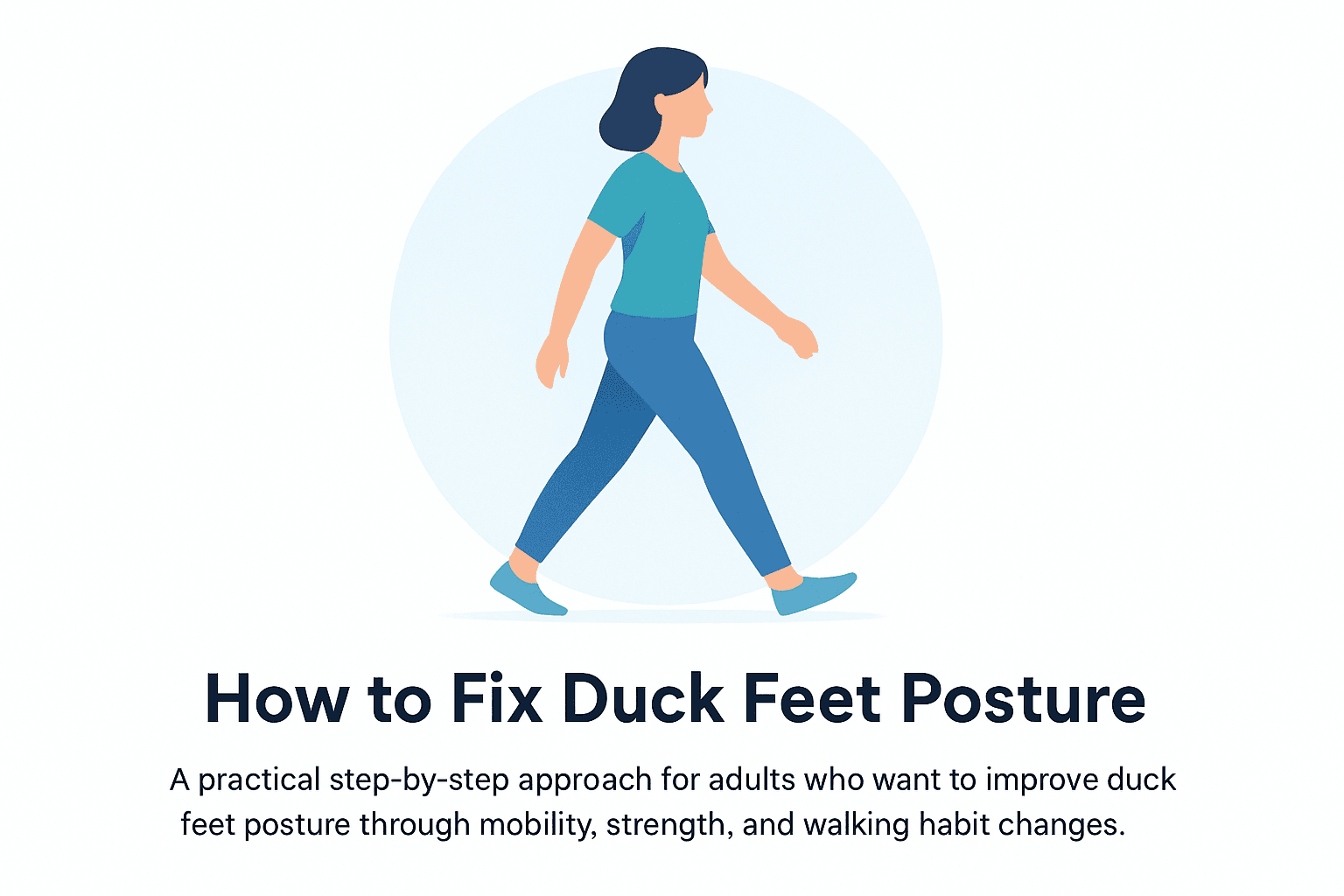
If your feet point outward, trying to "force them straight" all day is rarely the best strategy. A better approach is to improve the movement factors that influence your walking pattern.
Start with the right expectation
For most adults, progress comes from reducing symptoms, improving control, and walking with better consistency over time, not from an instant visual change.
Step 1: Build baseline awareness (3-5 days)
Track these basics once per day:
- Pain or discomfort level (0-10)
- Walking tolerance (minutes or distance)
- Activities that increase symptoms (stairs, long walks, standing)
- Activities that improve symptoms (rest, mobility work, lower volume)
This gives you a starting point and helps you notice real progress.
Step 2: Improve mobility where needed
Limited hip and ankle mobility often contribute to out-toeing patterns.
Hip Rotation Mobility
Focus: Improve internal/external hip rotation control
Ankle Dorsiflexion Drill
Focus: Improve ankle range for cleaner gait mechanics
Step 3: Add strength and control work
Mobility alone is usually not enough. You need strength and coordination to carry changes into walking.
Split-Stance Strength
Focus: Build lower-limb control under load
Step-Down Control
Focus: Coordinate hip-knee-foot alignment
Step 4: Practice gait carryover
During normal walking:
- Keep a relaxed pace.
- Focus on smooth foot placement, not rigid foot position.
- Maintain upright posture and easy arm swing.
- Recheck every 2-3 minutes instead of overthinking each step.
Short, consistent practice works better than occasional high-effort sessions.
A simple 4-week progression
| Item | Details |
|---|
Mistakes that slow progress
- Forcing feet into one position all day
- Progressing volume too quickly
- Ignoring next-day symptom response
- Changing too many variables at once
When to get professional help
A professional assessment can identify your main contributors and help you prioritize what matters most for your case.
Digital Guide
Want a practical visual framework?
Explore The Duck Feet Guide for educational visuals, practical context, and clearer next-step decisions.
Go to the GuideEducational content only. This article is not a substitute for professional medical advice, diagnosis, or treatment.
Related Articles
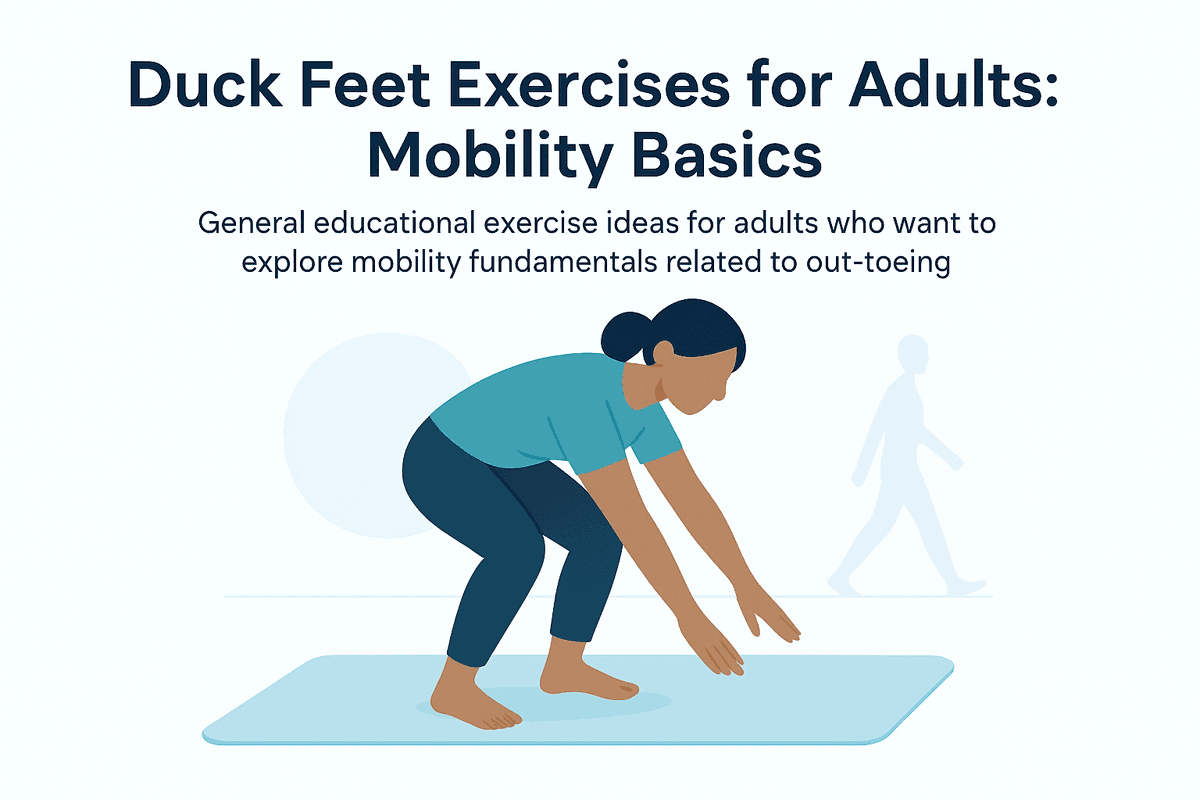
exercises
Duck Feet Exercises for Adults: Mobility Basics
General educational exercise ideas for adults who want to explore mobility fundamentals related to out-toeing.
Read More